
Why Most Startup Budgeting Processes Fail and How to Fix Them
Discover why most startup budgeting processes fail and learn practical strategies to build accurate budgets, improve cash flow management, and support sustainable business growth.
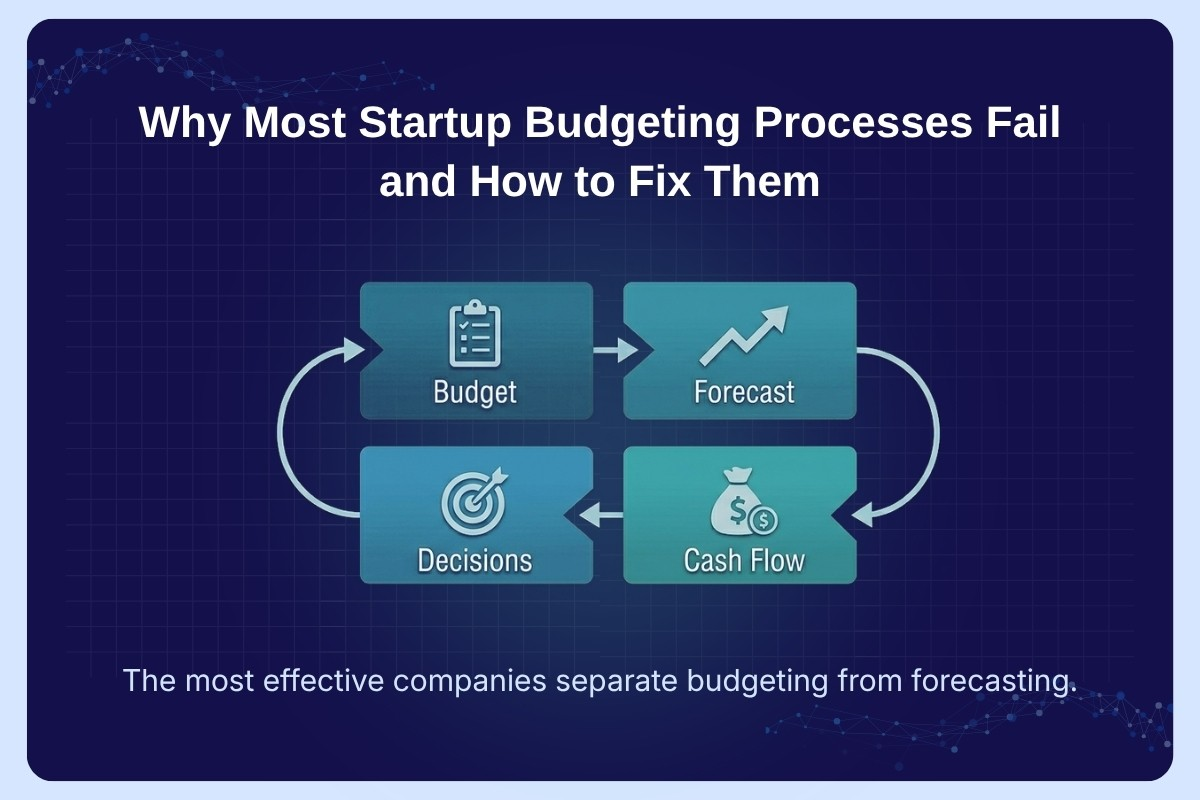
One of the most common budgeting mistakes is building expenses around revenue that has not yet been earned. Growth expectations are naturally optimistic, especially in startups with teams hiring ahead of demand, increasing marketing investments, and committing to larger operating expenses based on where they expect the business to be six or twelve months from now.
While there is nothing inherently wrong with planning for growth, the challenge arises when spending decisions are made before revenue is proven. If growth slows, customer acquisition becomes more expensive, or sales cycles lengthen, the cost structure remains while the assumptions behind it disappear.
Many startups do not run into financial pressure because revenue declines. They run into pressure because expenses were built for growth that arrived later than expected.
This often leads to difficult decisions around hiring, spending, and fundraising. Problems that appear to be cash flow issues are frequently budgeting issues that started much earlier.
Another reason startup budgeting processes fail is because budgeting is treated as an annual exercise. A budget may be approved at the beginning of the year and then referenced periodically, but very little changes even when the business itself changes significantly.
The reality is that markets evolve, competitors react, customer behavior shifts, and internal priorities change, yet many organizations continue operating against assumptions that were developed months earlier.
The most effective companies separate budgeting from forecasting. A budget establishes direction and provides a framework for decision-making. A forecast reflects current reality and should be updated regularly as conditions change.
The strongest finance teams are not necessarily the best at predicting the future. They are the best at adapting when the future unfolds differently than expected.
Rolling forecasts allow leadership teams to make decisions using current information rather than historical assumptions. This creates far greater agility and reduces the risk of being surprised by changes in performance. Even with the right budgets and forecasts, the most successful budgeting processes begin with alignment. Leadership agrees on growth expectations, hiring plans, investment priorities, and key business drivers before the budgeting process begins.
Cash flow is another area that receives less attention than it deserves. Many startups focus heavily on revenue growth and profitability while overlooking the timing of cash movement throughout the business. A company can appear profitable on paper and still experience significant financial pressure if customer payments are delayed or expenses must be paid before revenue is collected. Revenue and cash are not the same thing, and understanding that distinction is critical for growing businesses.
Cash flow is often what determines whether a startup survives long enough to achieve its growth plans. For this reason, every budget should be supported by a rolling cash flow forecast. Visibility into future cash requirements allows leadership teams to identify potential gaps early and make adjustments before they become problems.
Ultimately, budgeting is not about predicting the future perfectly. No startup gets every assumption right. Markets move too quickly and growth rarely follows a straight line.
The purpose of budgeting is to create a framework that helps leadership make better decisions as conditions change. Businesses that get the most value from budgeting are not necessarily the ones with the most complex models or detailed spreadsheets. They are the ones that review assumptions regularly, update forecasts consistently, maintain visibility into cash flow, and ensure every department is working toward the same financial objectives.
A budget should not be a document that explains the business once a year. It should be a tool that helps run the business throughout the year.
When budgeting becomes an ongoing management process rather than an annual finance exercise, it stops being a reporting requirement and becomes a competitive advantage.
Ready to build a smarter budget for your startup? Schedule a consultation today and gain the financial clarity needed to grow with confidence.


.svg)
.svg)