
How to Improve Profitability Without Cutting What Matters
Learn practical strategies to improve business profitability without cutting essential resources, quality, or growth opportunities.
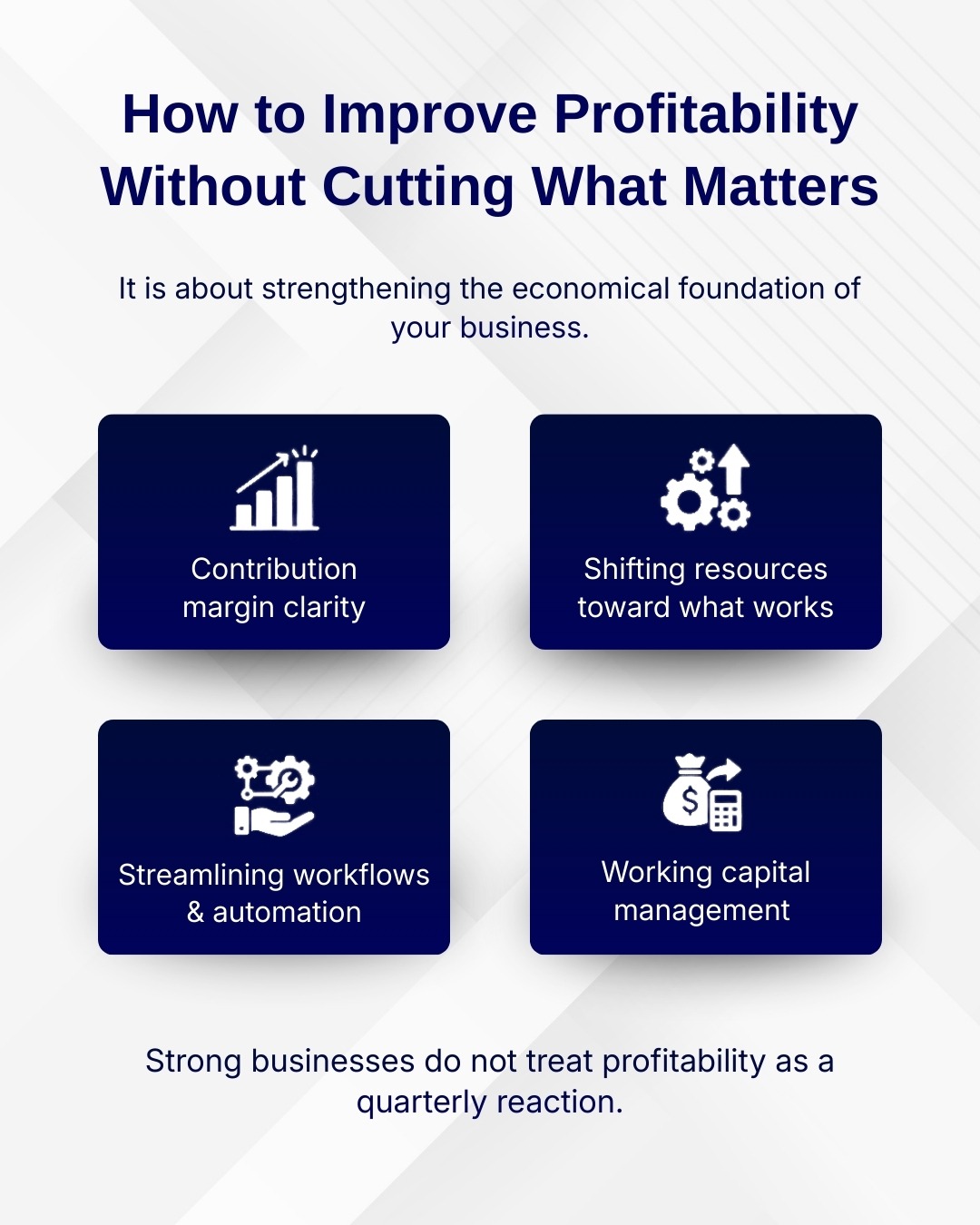
Improving profitability is about strengthening the economic foundation of your business to be sustainable, precise, and intentional in structure rather than blunt reductions.
The starting point is understanding contribution margin at a granular level. Many leadership teams review overall net income, but should be analyzing product line, service offering, client segment, and even channel. When you understand where margins are strongest and where they erode, you can reallocate focus instead of reducing investment broadly. Often, improving profitability begins with shifting resources toward what already works.
Before reducing expenses, evaluate whether pricing reflects the value delivered and the risk assumed. Modest, well-justified pricing adjustments frequently have a greater impact on profitability than aggressive cost-cutting. A two or three percent pricing improvement flows almost entirely to the bottom line when fixed costs remain stable. Before reducing expenses, evaluate whether pricing reflects the value delivered and the risk assumed, create a comparison with competitors' offers, and evaluate your differentiators. Remember, people pay more often premium prices for great customer service.
Reviewing key operational efficiencies. This does not mean pushing teams harder. It means examining processes to streamline workflows and automate repetitive tasks that increase output without increasing cost. The result is an improved margin without sacrificing talent or strategic capability. Sometimes, optimizing headcount can be difficult but worth it when the correct hires are onboarded properly, accountable for performance metrics, and increase productivity.
Vendor management is another area that strengthens profitability without harming core operations. Many companies accept renewal terms without review when contracts for software, services, and subscriptions accumulate quietly. A structured vendor review process can identify overlapping tools, unused licenses, and renegotiation opportunities so any savings generated end up being structural and create the opportunity to better understand how these are used.
Working capital management has a direct impact on profitability that is often underestimated. Slow receivables tie up capital and increase financing costs. Strengthening collections processes, aligning payment terms strategically, and maintaining disciplined inventory management improve financial resilience and reduce the need for external funding. Businesses that also track the performance of capital decisions build a stronger margin over time because resources are directed where they generate durable value.
Improving profitability without cutting what matters requires data, disciplined reporting, and strategic alignment, but also requires understanding what the numbers are and why they look the way they do. We need to have a yardstick to measure against it.
Read the guide and learn how to increase profits without sacrificing quality or long-term growth.


.svg)
.svg)